

The med spa client in 2026 is not who she was five years ago. She has done her research before she calls. She has read reviews, scrolled your Instagram, checked your booking page, and probably compared you to two competitors before she ever reaches out. He has watched videos about the treatment, knows roughly what it costs, and wants to know whether your providers understand what they are talking about. They both expect the experience to match the impression your online presence created.
For med spa owners, that shift changes everything about how a practice needs to operate. Attracting clients is no longer the hardest part. Meeting expectations once they find you, and building something strong enough to bring them back, is where practices win or lose. This article covers what med spa clients genuinely expect at each stage of their journey in 2026 and what needs to be in place to consistently deliver it.
The med spa client experience begins before a single appointment is scheduled. In 2026, potential clients expect clear service descriptions, transparent pricing signals, genuine photos, and an easy path to booking when they find a practice online. Practices that make the discovery experience frictionless consistently generate more inquiries than those that require a phone call to get basic information.
A potential client's first interaction with your practice is almost always digital—a Google result, a social post, or a review platform. What they find in that moment either earns their interest or loses it to a competitor who answered the question more clearly.
This is where the connection between client experience and the ability to increase med spa leads becomes direct. The practices consistently generating new client inquiries are not necessarily spending more on advertising. They are making the discovery experience clear, credible, and easy to act on.
The first appointment is the highest-stakes touchpoint in the entire client relationship. It is the moment a potential long-term client decides whether your practice is worth coming back to.
What clients notice at a first appointment goes far beyond the quality of the treatment itself. They notice whether the intake process felt organized or chaotic. Whether the provider reviewed their history before walking in. Whether the front desk seemed calm or overwhelmed. Whether they felt genuinely consulted or quickly processed.
The practices that convert first-time clients into returning ones tend to have one thing in common: their operations are clean enough that the clinical experience is all the client has to think about. That is a function of medical spa management done well, not just the clinical side, but the operational infrastructure that shapes everything from check-in to checkout.
Beyond logistics, clients in 2026 bring specific expectations into the treatment room. The era of passive, uninformed clients is largely over. They expect to be educated, involved, and respected as decision-makers in their own care.
What that looks like in practice:
Clients who feel genuinely cared for during the appointment become the clients who refer others. That referral effect is one of the most direct and underrated ways to increase revenue in a med spa without increasing the marketing budget.
The post-visit experience is where the majority of med spas lose clients they have already won. A client who had an excellent first treatment but received no follow-up communication, no rebooking reminder, and no sense that the practice was tracking their progress is a client who drifts. Not because they were unhappy, but because nothing reminded them to return.
What clients expect after the appointment in 2026:
This is where a well-structured med spa loyalty program moves from a nice-to-have to a genuine retention engine. In 2026, the clients most likely to refer others are not the ones with the most points, they are the ones who feel like the practice is paying attention between visits. Clients enrolled in a program with clear and simple benefits, maintenance rewards, referral credits, package savings, have a concrete reason to return built into the relationship. A strong loyalty program supports repeat visits and higher average client value over time, especially when the benefits are simple, visible, and easy to act on.
Delivering a seamless client experience at every stage—discovery, first visit, follow-up, retention—is not about working harder. It is about having the right systems running underneath the experience.
The right spa management software connects every stage of the client journey into a single workflow. Online booking that reflects real availability. Digital intake that loads before the client arrives. Treatment documentation that gives the provider context before they walk in the room. Automated follow-up that goes out without anyone on the front desk having to remember to send it. A loyalty program that tracks automatically. Reporting that shows the practice where clients are falling off.
That operational foundation is what separates practices that grow sustainably from those that grow in bursts and then plateau. The medical spa software running behind the scenes is not just an administrative tool, it is the infrastructure that determines whether the experience clients expect is the experience they actually receive. And as the practice grows, the gap between what clients expect and what a disconnected system can deliver gets wider, not smaller.
In 2026, client expectations are not a trend. They are the standard. The practices that meet them consistently are the ones that build the kind of reputation that makes marketing easier, referrals automatic, and growth predictable.
AestheticsPro connects every stage of the client journey, from online booking, digital intake, treatment documentation, automated follow-up, loyalty programs, and reporting, in one platform built specifically for medical spas.
Book a free demo and see how AestheticsPro helps your practice deliver the experience today's med spa clients expect at every appointment.
Q1: What do med spa clients expect in 2026 before they book?
Clients expect a clear, frictionless digital discovery experience. That means accessible service descriptions, visible pricing signals, real reviews, and an easy online booking path. Practices that make the pre-booking experience simple and credible consistently increase med spa leads without increasing ad spend.
Q2: How does a med spa loyalty program improve client retention?
A well-structured med spa loyalty program gives clients a concrete reason to return built into the relationship itself. Simple programs with maintenance rewards, referral credits, and package savings support repeat visits and higher average client value over time. The simpler the structure, the more effectively it drives behavior.
Q3: What does strong medical spa management look like from the client's perspective?
Strong medical spa management means the operational infrastructure—intake, scheduling, documentation, follow-up, and reporting—is clean enough that clients only have to think about their treatment. When operations create friction, clients notice. When they are seamless, clients associate that professionalism with the practice and come back.
Q4: How does spa management software connect to the client experience?
The right spa management software connects every client touchpoint—booking, intake, treatment documentation, follow-up, and loyalty—into one workflow. That connection is what allows a practice to deliver a consistent, personalized experience as it scales. Without it, consistency depends on individual staff effort, which creates gaps as client volume grows.
Q5: How do client expectations connect to the ability to increase revenue in a med spa?
Clients who feel genuinely cared for refer others, return more frequently, and spend more per visit over time. Meeting expectations at every stage of the journey is one of the most direct ways to increase revenue in a med spa sustainably without relying solely on new client acquisition.
Related articles on growth, operations, and the systems shaping modern medical aesthetics practices.
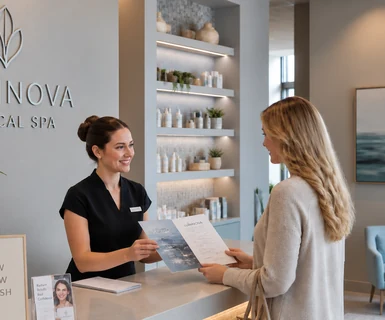
Discover holiday upselling strategies to increase revenue in a med spa with packages, med spa loyalty programs, and med spa software...

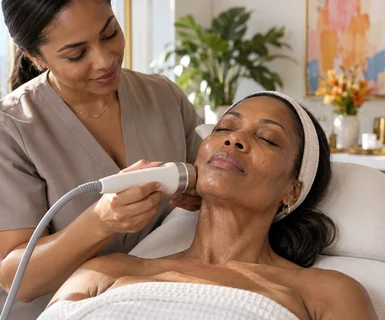
Explore post-GLP-1 aesthetic treatments for volume loss, skin laxity, body contouring, and how medical spa software supports ongoing care...
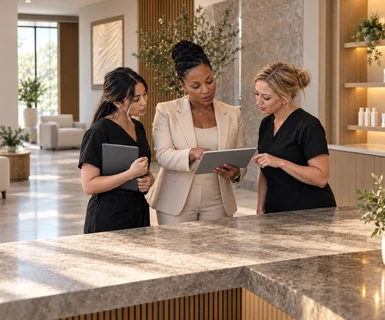
Plan for the med spa holiday rush with a practical checklist for staffing, revenue, inventory, communication, and medical aesthetics software...

Learn how to plan winter aesthetic procedures before holiday events, including timing, downtime, skin quality, and natural-looking results...

See when growing med spas need med spa management software, what small business tools may outgrow, and what to look for next...
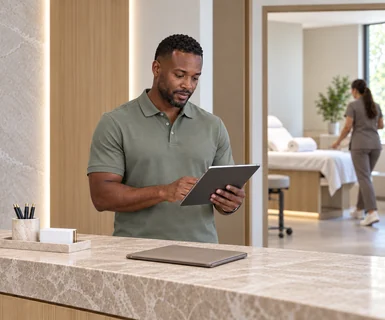
See what medical spa booking software should do before the visit, from intake and reminders to connected practice workflows...

See how spa management software can support repeat visits, memberships, stronger client retention, and long-term medspa growth...
See how AI-powered med spa software is helping aesthetic practices streamline workflows, save time, and improve the client experience...

Beauty optimizers are mixing aesthetics, wellness, and longevity. See what this trend could mean for clients and spa management software...


 Login
Login